Post-transplant day #1073. The fault in MY stars.
"The fault, dear Brutus, is not in our stars, but in ourselves, that we are underlings" Cassius says in Julius Ceasar. He is explaining that if there are any obstacles to realigning Rome's leadership to something more equal, the impetus must come from within. Food for thought. Especially in relation to cancer, where a person may wonder if at some point they had enough control to avert this.
These last six months. It isn't that I have nothing to say, it's that I'm not sure how to say it. How to fashion the murder of crows that passes for thoughts in my brain these days into something rather more beautiful and coordinated. As John Greene put it, "my thoughts are stars I can't fathom into constellations"; a saying I find very apropos these days.
I have not written much about my cancer as these last seven months have passed. I start to write, then stop, and it suddenly feels very, very meaningless. I'm a newcomer to this corner of medicine and anything I may have to say has been said a thousand times by a thousand other voices more thoughtful than mine. And what could I say, but over and over "I'm tired, I'm tired, I'm really very tired." Even the most patient of caregivers would get tired of that refrain.
And yet, if you want a concrete detail, that is how my cancer stands in my mind: constant weariness, regular exhaustion, severe anemia. There are also bowel irregularities as my body takes its sweet fucking time adjusting to the new plumbing. It can ruin my day - I'll leave it at that.
Cancer forces profound realizations upon its victims and their families, in ways similar to transplant. That the cure is sometimes worse than the disease, for instance. Individual rounds of chemo could be planned for and dealt with and seem somewhat easy, but the long course of it ground me down, exhaustion settling into my bones in a way that felt irreversible (though right now, a month out from my last dose, I'm feeling much better!)
The immediate fatigue 5FU caused me ranged from mild to severe, but it always meant the next week would be a bad week. April and I began to plan around these weeks and April didn't push me to get much more done than work, eat, take meds, and sleep. The surgery hurt, the chemo wore me down, but the worst effect, I think, is what this has done to April.
April is the one who has most directly borne the reality of my cancer, outside myself. She watched me sleep through leaden weekends, took me to the hospital, sat with me throughout. She double-checked everything the doctors and nurses said against her medical experience and did her own research on colorectal cancer. And if she was short with me now and then, it just shows she's human. Her frustrations boil over and I think one of those frustrations is my refusal to panic over the cancer or its treatment.
Now that...THAT is a subject for a whole post of its own: Stoicism as a primary coping strategy. Not doctor approved, I'm sure.
I got through it. That's all. I did not shine, I did nothing exceptional. I kept my nose to the grindstone at work and limited my extracurricular activities. I tried not to bitch and complain, even as chemo brain set in and I found myself with a spotty memory. Very spotty. On top of the exhaustion and bowel troubles. The memory loss bothered me more than anything, because it means that my cancer has managed (via its own treatment) to get to my brain. When you find yourself forgetting, you wonder WHAT you forgot, and when. You wonder how much of yourself might be slipping away, without knowing it. Blissful...and terrifying.
Now let's face the future: Last week I had PET and MRI scans. And Tuesday, my oncologist sat me down and let me know that the spot the PET scan had found had been confirmed by MRI. I have liver cancer.
Once again, I head into unknown territory. My immediate future involves getting cut open from sternum to belly button, to be able to get at that spot and cut it out. There will be significantly longer initial recovery than with my sigmoidectomy, the doctors tell me. (Of course, I hope to prove them wrong.) And after that, more chemo. This time oxalyplaten will be added to the treatment, alongside 5FU. April is understandably upset and has expressed that she's afraid chemo will tip my kidneys into outright failure. I talked to the liver surgical oncologist today about that issue and he noted that they've had plenty of patients in kidney failure and they will carefully set doses and timing so as to be as easy on my kidneys as possible.
And that...is that. It's all I know right now. Tonight I'm reminded that the fault is NOT in our stars, but in ourselves. If I wish to conquer, then I must BE a conquerer. I must work hard at this next phase, particularly recovery, and not allow chemo to control my life so much. Though...really.... I don't give much chance of that.
Okay?
Okay.
Showing posts with label transplant. Show all posts
Showing posts with label transplant. Show all posts
November 16, 2016

September 5, 2016
The gift of the 1000th day
Post-transplant day #1000. The true gift.
We went out for steak. And then gelato. We dressed nicely and made a date night out of it. We chanced upon another couple in the park and asked them to take our picture, and then we told them our story.
Tonight we celebrated our 1000th day into our second life, our 1000thnew borrowed dawn, our 1000th safe night's sleep.
When I asked my fiancée over the appetizer what she has learned, she thought a minute and then a surprising gush of goals marked and dreams achieved came forth. We talked over what she had wanted before transplant, and what has actually come true. For the most part, everything her heart desired has happened or is about to.
As our discussion got more detailed about what we had dared to hope pre-transplant for our post-transplant life, it seems our goals were more aligned than we previously realized. Both of us dared to hope that we might find somebody to settle down with, perhaps even someone who'd been through what we'd been through. We dared to hope that that person wouldn't see us primarily as a medical case, but first as a person. We dared to hope that we would understand each other's careers, interests, and passions. We dared to hope these things, and so maybe our meeting wasn't as much chance as destiny.
Through succulent steaks and savory sides, we remembered and celebrated. We didn't dwell on the stresses of transplant life or the present stresses of job-hunting or cancer. We toasted our donors and moved on, which somehow seems to be the very point. Move on! We have healed, our donors' families have had time to heal, April and I (and Mac and Mable and Sadie) have come together to form a new family, and we look to our futures with a lot of...well....hope. Eternal hope.
We're not forgetting our friends, of course, those who are struggling to make their 1000 days, or who have already required re-transplant. We certainly don't forget those who didn't make it. They're never far from our minds, as they live in our hearts; and with the very recent deaths of Korinna Conron and Talana Fairfax, we are more determined than ever to keep up the good fight and to carry their memories with us.
April is the match I long awaited and I love her in ways I never imagined. Our love is inextricably bound up in our transplant story. And tonight, over drips of gelato, we reminded ourselves that our story is no longer one just of surviving, but of Living, Laughing, and Loving.
THIS is the true gift -- the Gift of the 1000th Day.

We went out for steak. And then gelato. We dressed nicely and made a date night out of it. We chanced upon another couple in the park and asked them to take our picture, and then we told them our story.
Tonight we celebrated our 1000th day into our second life, our 1000thnew borrowed dawn, our 1000th safe night's sleep.
When I asked my fiancée over the appetizer what she has learned, she thought a minute and then a surprising gush of goals marked and dreams achieved came forth. We talked over what she had wanted before transplant, and what has actually come true. For the most part, everything her heart desired has happened or is about to.
As our discussion got more detailed about what we had dared to hope pre-transplant for our post-transplant life, it seems our goals were more aligned than we previously realized. Both of us dared to hope that we might find somebody to settle down with, perhaps even someone who'd been through what we'd been through. We dared to hope that that person wouldn't see us primarily as a medical case, but first as a person. We dared to hope that we would understand each other's careers, interests, and passions. We dared to hope these things, and so maybe our meeting wasn't as much chance as destiny.
Through succulent steaks and savory sides, we remembered and celebrated. We didn't dwell on the stresses of transplant life or the present stresses of job-hunting or cancer. We toasted our donors and moved on, which somehow seems to be the very point. Move on! We have healed, our donors' families have had time to heal, April and I (and Mac and Mable and Sadie) have come together to form a new family, and we look to our futures with a lot of...well....hope. Eternal hope.
We're not forgetting our friends, of course, those who are struggling to make their 1000 days, or who have already required re-transplant. We certainly don't forget those who didn't make it. They're never far from our minds, as they live in our hearts; and with the very recent deaths of Korinna Conron and Talana Fairfax, we are more determined than ever to keep up the good fight and to carry their memories with us.
April is the match I long awaited and I love her in ways I never imagined. Our love is inextricably bound up in our transplant story. And tonight, over drips of gelato, we reminded ourselves that our story is no longer one just of surviving, but of Living, Laughing, and Loving.
THIS is the true gift -- the Gift of the 1000th Day.

August 16, 2014
Message in a Bottle
Post-transplant day #249. Message in a bottle.
Finally got my letter mailed. On a day that I remember my father, who died of lung disease like his father before him, I mailed a letter to the family that helped me avoid that same fate.
Though I wrote it on the 10th, I let it percolate in my mind a bit to see if there was anything critical missing, or maybe too much said, in this initial communique. I also needed to print out a couple of photos I wanted to send, and I wanted those prints to be good ones that will last and are suitable for framing, if my donor family wants to. (I have to say, that at 25¢ a pop for 4x6, it's cheaper to use CVS' photo-printing service than to print them myself. And they were ready in an hour. Beautiful prints!) I jotted some notes on the back, stuffed envelopes as directed by Carolina Donor Services and, with a quick wish to not get lost in the mail, dropped my letter into the post box.
Finally got my letter mailed. On a day that I remember my father, who died of lung disease like his father before him, I mailed a letter to the family that helped me avoid that same fate.
Though I wrote it on the 10th, I let it percolate in my mind a bit to see if there was anything critical missing, or maybe too much said, in this initial communique. I also needed to print out a couple of photos I wanted to send, and I wanted those prints to be good ones that will last and are suitable for framing, if my donor family wants to. (I have to say, that at 25¢ a pop for 4x6, it's cheaper to use CVS' photo-printing service than to print them myself. And they were ready in an hour. Beautiful prints!) I jotted some notes on the back, stuffed envelopes as directed by Carolina Donor Services and, with a quick wish to not get lost in the mail, dropped my letter into the post box.
This isn't just words and pictures I was sending. This was like
throwing my heart into the wind, hoping it gets blown back to me. This
could be the opener for a new, lifelong, and very unique relationship
with a person or family I don't yet know, or it could be the sum total
of our communication, if they choose not to respond. I can only wait
and see.
But what kills me, what truly ties me up in fits of frustration and anger at the unfairness of it all, is that I'll never, ever, *ever* be able to thank my donor in person. That consciousness is gone for all eternity, and except for these few pounds of precious tissue inside my chest, he and I are but two ships that passed in the night.
Today, I am reminded that though my debts of gratitude are legion, the most important debt of all can never be repaid. I can only express my thanks by proxy, and volunteer to pay it forward, should I ever get that chance. Bless you my donor.
But what kills me, what truly ties me up in fits of frustration and anger at the unfairness of it all, is that I'll never, ever, *ever* be able to thank my donor in person. That consciousness is gone for all eternity, and except for these few pounds of precious tissue inside my chest, he and I are but two ships that passed in the night.
Today, I am reminded that though my debts of gratitude are legion, the most important debt of all can never be repaid. I can only express my thanks by proxy, and volunteer to pay it forward, should I ever get that chance. Bless you my donor.
July 5, 2014
Support from afar
Post-transplant day 207. Support from afar.
It was cosmic somehow, this moment in a bubble with this small family. Cosmic because my most vital life experience led me here, now, to talk to this young mother and father - and no other circumstances would have brought us together. And if certain things had changed anytime in the last 12 years - we would have missed it.
Let me back up to 2002. Shortly after the WTC attack, I was working for NYU and my soul was dying. I was a man without a hobby. I worked, ate, slept, and worked more. So I bought a motorcycle I dubbed Roxie (after Roxanne Heart, not Rocinante, if you must know), and thus began an 8-year adventure that would add new dimensions to my world, bring me lifelong friends, and challenge me in ways I could never have foreseen.
But as I grew sicker, my coughing led to rare occurrences of cough syncope, a side effect I determined was too dangerous and incompatible with safely riding a motorcycle. With a heavy heart, I sold Roxie. And as I grew sicker yet, and went on oxygen, I turned away from the world of motorcycling completely, packing away my gear out of sight, unsubscribing from email lists. Something inside me went cold and still. And shrank.
But transplant has a way of restoring life, not just physically, but also rejuvenating social contacts, adding new relationships, and opening the doors to exploring all those things you wanted to do but .... just couldn't.
So today, for the first time in over three years, I donned my helmet and jacket, sat in the saddle of a Harley Sportster, flipped the run button to ON, and hit the starter. The rumble the engine sent through me pervaded more than my body. And I felt like I could finally take that big, deep breath transplant promised.
My first test as to whether I "still have it" was getting the bike off my buddy's concrete patio and down his dirt, gravel, (and mud) driveway. Not only was I calling into play rusty skills, but at the same time getting familiar with a different bike - albeit one of the same model as Roxie. And navigating an unpaved surface is a higher-order skill any day. I'm pleased that I made it to blacktop with nary a mishap.
The first few miles were of Maryland backroad leading to the interstate, and as I pulled out onto the county highway and clicked up through the gears, I felt the wind rush into my visor, into my lungs, and into my being. I got the biker wave from guys heading the other way. With the gorgeous weather, I wasn't surprised to see so many people out on their bikes, but the instant familiarity and friendliness of other bikers to this oldie-cum-newbie somehow took me by surprise. And I felt something old and withered (and dead I thought) suddenly spring up with a little green. Shortly before the intersection with I-95, I had to pull over. Must have been some dust in the air. I had to clear my eyes.
So what's the first thing a good biker does with an unfamiliar bike? He ascertains his fuel capacity and range. To do that, I needed to top off with gas and set the trip odometer to zero. After sixteen exhilarating miles on the highway, I pulled into Maryland House, topped off, and then on a whim, decided to look for some chocolate milk.
The young man and woman sitting in the middle of the main aisle had their backs to me as I approached, but I couldn't help but see the green and silver and the smoothly curving sides: an E-tank. I supposed the man was on oxygen for a good reason, but moved swiftly past trying to find the chocolate milk. "Poor fucker," I thought. "Maybe I'll ask what disease he's got; maybe he has CF too?" I came up empty on the choco, and as I returned, I got a better look. The oxygen cord ran to a nasal cannula. A very small cannula, which was taped to....a baby. I was shocked. Outside of a neo-natal ICU, I haven't seen a baby on O2. Mommy was trying to keep the baby from fussing while dad was messing with some benadryl and some syringes.
I stopped. I think I failed to introduce myself, and was certainly too direct in my questions. So here's some biker asking this somewhat nervous looking family why their baby is on oxygen. The mom, having just explained this to a couple of other women who had been cooing at the baby, explained to me that "his lungs are bad". I crouched to meet her eye level and said conspiratorialy, "I was on oxygen recently, too, for about 18 months."
"And you don't need it now?"
I smiled broadly. "No, ma'am. I got a double lung transplant at Duke." Mommy's eyes popped a little when she heard that and it also got Daddy's attention as well.
"The doctors have spoken of getting him a lung transplant," the mom said. "It's possible, they said."
Knowing nothing of pediatric transplant, much less neonatal lung transplantation, I just nodded dumbly. My attention switched to Daddy, who was struggling with syringes. "Ah, the ol' g-tube." I commented. That got a smile. "You know what this is? Have you had one?" I had to admit I'd managed to avoid it, but was familiar with g-tubes because of my friends. The infant was wiggling a lot and Daddy was having to play chase with the end of the tube. I learned the little guy has pulmonary hypertension.
I suppose I could have stayed and talked to them of transplant, but I seriously doubt any of my experience, or that of my friends, will translate into what they will go through. Now that I've looked it up, neonatal lung transplantation is all but unheard of. It's been done a couple of times, but the procedure is still...well, in its infancy, shall we say? (http://www.ncbi.nlm.nih.gov/pmc/articles/PMC1590489/) The odds aren't good for this kid. I guess I already knew that, and as I stood up I simply wished all three of them the very best of luck.
The rest of my trip home was uneventful, though my mind mulled over this moment. So many factors, starting from twelve years ago involving biking and transplant, leading up to the moment of a strange and unusual craving for chocolate milk led to this random run-in. There were more things unsaid than said in those few moments. The parents looking at me with weariness at first, then after I revealed I'm a survivor of lung disease, the look of ... desperate hope that filled their eyes. Maybe this family sees a future for their son...
Today I am reminded that a little support from a long way out can mean more sometimes than the usual caregiving. In a unique time of both need and renewed ability, my buddy offered up a whole motorcycle to help me jump start that aspect of my life. For him, maybe a fairly simple act, but for me, it is sunshine and rain where I've had neither. And, cosmically, in return, when a worried family sits down in a travel center to take care of their sick infant's needs, a stranger stops by just to say "I've been there -- and, you know, it could be OK."

It was cosmic somehow, this moment in a bubble with this small family. Cosmic because my most vital life experience led me here, now, to talk to this young mother and father - and no other circumstances would have brought us together. And if certain things had changed anytime in the last 12 years - we would have missed it.
Let me back up to 2002. Shortly after the WTC attack, I was working for NYU and my soul was dying. I was a man without a hobby. I worked, ate, slept, and worked more. So I bought a motorcycle I dubbed Roxie (after Roxanne Heart, not Rocinante, if you must know), and thus began an 8-year adventure that would add new dimensions to my world, bring me lifelong friends, and challenge me in ways I could never have foreseen.
But as I grew sicker, my coughing led to rare occurrences of cough syncope, a side effect I determined was too dangerous and incompatible with safely riding a motorcycle. With a heavy heart, I sold Roxie. And as I grew sicker yet, and went on oxygen, I turned away from the world of motorcycling completely, packing away my gear out of sight, unsubscribing from email lists. Something inside me went cold and still. And shrank.
But transplant has a way of restoring life, not just physically, but also rejuvenating social contacts, adding new relationships, and opening the doors to exploring all those things you wanted to do but .... just couldn't.
So today, for the first time in over three years, I donned my helmet and jacket, sat in the saddle of a Harley Sportster, flipped the run button to ON, and hit the starter. The rumble the engine sent through me pervaded more than my body. And I felt like I could finally take that big, deep breath transplant promised.
My first test as to whether I "still have it" was getting the bike off my buddy's concrete patio and down his dirt, gravel, (and mud) driveway. Not only was I calling into play rusty skills, but at the same time getting familiar with a different bike - albeit one of the same model as Roxie. And navigating an unpaved surface is a higher-order skill any day. I'm pleased that I made it to blacktop with nary a mishap.
The first few miles were of Maryland backroad leading to the interstate, and as I pulled out onto the county highway and clicked up through the gears, I felt the wind rush into my visor, into my lungs, and into my being. I got the biker wave from guys heading the other way. With the gorgeous weather, I wasn't surprised to see so many people out on their bikes, but the instant familiarity and friendliness of other bikers to this oldie-cum-newbie somehow took me by surprise. And I felt something old and withered (and dead I thought) suddenly spring up with a little green. Shortly before the intersection with I-95, I had to pull over. Must have been some dust in the air. I had to clear my eyes.
So what's the first thing a good biker does with an unfamiliar bike? He ascertains his fuel capacity and range. To do that, I needed to top off with gas and set the trip odometer to zero. After sixteen exhilarating miles on the highway, I pulled into Maryland House, topped off, and then on a whim, decided to look for some chocolate milk.
The young man and woman sitting in the middle of the main aisle had their backs to me as I approached, but I couldn't help but see the green and silver and the smoothly curving sides: an E-tank. I supposed the man was on oxygen for a good reason, but moved swiftly past trying to find the chocolate milk. "Poor fucker," I thought. "Maybe I'll ask what disease he's got; maybe he has CF too?" I came up empty on the choco, and as I returned, I got a better look. The oxygen cord ran to a nasal cannula. A very small cannula, which was taped to....a baby. I was shocked. Outside of a neo-natal ICU, I haven't seen a baby on O2. Mommy was trying to keep the baby from fussing while dad was messing with some benadryl and some syringes.
I stopped. I think I failed to introduce myself, and was certainly too direct in my questions. So here's some biker asking this somewhat nervous looking family why their baby is on oxygen. The mom, having just explained this to a couple of other women who had been cooing at the baby, explained to me that "his lungs are bad". I crouched to meet her eye level and said conspiratorialy, "I was on oxygen recently, too, for about 18 months."
"And you don't need it now?"
I smiled broadly. "No, ma'am. I got a double lung transplant at Duke." Mommy's eyes popped a little when she heard that and it also got Daddy's attention as well.
"The doctors have spoken of getting him a lung transplant," the mom said. "It's possible, they said."
Knowing nothing of pediatric transplant, much less neonatal lung transplantation, I just nodded dumbly. My attention switched to Daddy, who was struggling with syringes. "Ah, the ol' g-tube." I commented. That got a smile. "You know what this is? Have you had one?" I had to admit I'd managed to avoid it, but was familiar with g-tubes because of my friends. The infant was wiggling a lot and Daddy was having to play chase with the end of the tube. I learned the little guy has pulmonary hypertension.
I suppose I could have stayed and talked to them of transplant, but I seriously doubt any of my experience, or that of my friends, will translate into what they will go through. Now that I've looked it up, neonatal lung transplantation is all but unheard of. It's been done a couple of times, but the procedure is still...well, in its infancy, shall we say? (http://www.ncbi.nlm.nih.gov/pmc/articles/PMC1590489/) The odds aren't good for this kid. I guess I already knew that, and as I stood up I simply wished all three of them the very best of luck.
The rest of my trip home was uneventful, though my mind mulled over this moment. So many factors, starting from twelve years ago involving biking and transplant, leading up to the moment of a strange and unusual craving for chocolate milk led to this random run-in. There were more things unsaid than said in those few moments. The parents looking at me with weariness at first, then after I revealed I'm a survivor of lung disease, the look of ... desperate hope that filled their eyes. Maybe this family sees a future for their son...
Today I am reminded that a little support from a long way out can mean more sometimes than the usual caregiving. In a unique time of both need and renewed ability, my buddy offered up a whole motorcycle to help me jump start that aspect of my life. For him, maybe a fairly simple act, but for me, it is sunshine and rain where I've had neither. And, cosmically, in return, when a worried family sits down in a travel center to take care of their sick infant's needs, a stranger stops by just to say "I've been there -- and, you know, it could be OK."
March 18, 2014
What can be.
Post-transplant day 98, rehab #48.
Though I had to drag myself to rehab today (insomnia and pain still affecting my sleep you know), it turned out to be a good day. First of all, it felt good to be able to share the news of Andrea and Ellie's transplants among our rehab friends. [The rehab staff already knew, as tends to happen on Tuesdays because the they send representatives to the weekly transplant team meeting where every patient's progress is reviewed.]
Secondly, I notched some small marks of progress. On the treadmill, I was able to put in a jog interval of a full three minutes! I followed that by more intervals, totaling eight minutes of jogging, 12 of walking. My goal before sinus surgery is to get in a 5-minute jog interval and get the jog/walk ratio to 50:50 or better. Anyway, believe me that after a year of no running and then a major surgery, three solid minutes at six miles an hour is a victory.
I also decided to continue something I tried on my last "arms" day: pull-ups. The first time I did this, nobody but Kyle noticed and that was probably a good thing. This time, though I had the unsolicited attention of several patients and a couple of the therapists. I managed five pullups and it was generally met with approval. This will probably be the feat that gets my ass booted out of rehab and put over in CFL. We'll see.
But I hope not because of what happened at the end of the day.
After 5:15, the place quickly becomes a ghost-town. As I was packing up, there were only two or three of us patients left and all the therapists had disappeared into the office, leaving the exercise floor a towel-strewn desert baking under the noonday glare of 3200K fluorescents, with only ghosts occupying the floormats and the arms of the weight machines jutting up like steel saguaro.
As a chill breeze whistled through, carrying the lonesome notes of some downbeat iTunes radio station, I was stopped by the other patient who was still there packing up. He is not eligible for a transplant, but is there trying to keep what's left of his lungs (after several cancer surgeries) strong. He does a good job! He confirmed with me that I'd already had transplant and then thanked me for still being here. I said I'm surprised they haven't sent me over to CFL yet, but am more than happy to continue working out at the ideal gym. He said he liked having me around because it's highly motivational to everybody else. He said he noticed people work harder when I'm around. He said he hopes I stick around at rehab until I leave for New York because I'm good for the general atmosphere; I set a mark to strive for; I show what CAN BE.
I really needed to hear that. I constantly have my doubts about whether I should be exercising there. I hope to be able to lead by example, but I have very little proof that my presence has any positive impact at all. I'm afraid I'm seen as a showoff by some of the patients simply by performing at the level I do (which is honestly NOTHING compared to my real athlete friends!); and I don't want to fall into the trap of performing so well as to demoralize them. But today I was reminded - unsolicited - that all I have to do is continue to do what I do, and that will be enough to inspire those who want to be inspired and motivate those who want to be motivated. The therapists don't need to crack a whip, nor beg and plead, nor cajole, nor patronize - they just need to keep one or two patients like me around - patients who inspire just by coming out and doing the rehab with 100% effort and a smile on our face and showing what can be.
Though I had to drag myself to rehab today (insomnia and pain still affecting my sleep you know), it turned out to be a good day. First of all, it felt good to be able to share the news of Andrea and Ellie's transplants among our rehab friends. [The rehab staff already knew, as tends to happen on Tuesdays because the they send representatives to the weekly transplant team meeting where every patient's progress is reviewed.]
Secondly, I notched some small marks of progress. On the treadmill, I was able to put in a jog interval of a full three minutes! I followed that by more intervals, totaling eight minutes of jogging, 12 of walking. My goal before sinus surgery is to get in a 5-minute jog interval and get the jog/walk ratio to 50:50 or better. Anyway, believe me that after a year of no running and then a major surgery, three solid minutes at six miles an hour is a victory.
I also decided to continue something I tried on my last "arms" day: pull-ups. The first time I did this, nobody but Kyle noticed and that was probably a good thing. This time, though I had the unsolicited attention of several patients and a couple of the therapists. I managed five pullups and it was generally met with approval. This will probably be the feat that gets my ass booted out of rehab and put over in CFL. We'll see.
But I hope not because of what happened at the end of the day.
After 5:15, the place quickly becomes a ghost-town. As I was packing up, there were only two or three of us patients left and all the therapists had disappeared into the office, leaving the exercise floor a towel-strewn desert baking under the noonday glare of 3200K fluorescents, with only ghosts occupying the floormats and the arms of the weight machines jutting up like steel saguaro.
As a chill breeze whistled through, carrying the lonesome notes of some downbeat iTunes radio station, I was stopped by the other patient who was still there packing up. He is not eligible for a transplant, but is there trying to keep what's left of his lungs (after several cancer surgeries) strong. He does a good job! He confirmed with me that I'd already had transplant and then thanked me for still being here. I said I'm surprised they haven't sent me over to CFL yet, but am more than happy to continue working out at the ideal gym. He said he liked having me around because it's highly motivational to everybody else. He said he noticed people work harder when I'm around. He said he hopes I stick around at rehab until I leave for New York because I'm good for the general atmosphere; I set a mark to strive for; I show what CAN BE.
I really needed to hear that. I constantly have my doubts about whether I should be exercising there. I hope to be able to lead by example, but I have very little proof that my presence has any positive impact at all. I'm afraid I'm seen as a showoff by some of the patients simply by performing at the level I do (which is honestly NOTHING compared to my real athlete friends!); and I don't want to fall into the trap of performing so well as to demoralize them. But today I was reminded - unsolicited - that all I have to do is continue to do what I do, and that will be enough to inspire those who want to be inspired and motivate those who want to be motivated. The therapists don't need to crack a whip, nor beg and plead, nor cajole, nor patronize - they just need to keep one or two patients like me around - patients who inspire just by coming out and doing the rehab with 100% effort and a smile on our face and showing what can be.
October 29, 2013
Maintaining control while letting go
Pulmonary rehab, Day 16. How does one maintain control while letting go of it? This has become the central philosophical question for me.
I experienced a hard low today in rehab, by which I mean that my blood sugar went below 50. I had begun the day by going to rehab early, ostensibly to fit in the parts of the required workouts that I wouldn't be able to fit in by the 4:30 class if I only arrived at my designated 3:30 start time. I ended up doing all my workouts (weights, bike, walk) before 1:30, essentially using the relatively uncrowded heart-patient time slot to ease up my day. (I am pleased to report I marked another record distance on that stationary bike - 4.1 miles today with an increased resistance level for 15 minutes out of 20.)
Then I made the mistake of going to lunch. I needed to refuel so I could come back for a little more workout before class. So I opted for two bean burritos and a cherry limeade sparkler. Now, the limeade is 44 grams of carbs, according to Taco Bell's website. A bean burrito, 56g. I calculated 156 grams of carbs and divided by 9 (as I recently bumped my insulin to carbs ration downward from 1:7 to 1:9). I injected 17 units of insulin. Then I went back to rehab.
After being denied permission to try jogging on the treadmill, which I feel up to at least trying, I was told I could walk on an incline on the treadmill. A different kind of workout from everything else, so why not? I did 20 minutes with that, feeling good, then joined the floor class in progress.
Or tried to. Five minutes after lying down and in the middle of some leg lifts, I started feeling "off". The hot and shaky I attributed to having just come off the treadmill. But now my vision was starting to change and I had that weird feeling inside that signals a diabetic low. And when your vision begins to go, you know it's bad. So I stood up and zombied my way over to my bag o' holding and got my meter and strips out. 40. My BG was 40. And probably dropping.
So I sat there for a while, first gobbling a snack pack of marshmallows, then some juice and crackers that the staff brought me, testing my BG every ten minutes. The staff is very vigilant against diabetic lows here; the won't allow you to work out if your BG is below 70. 40, 55, 63...finally 91 - just in time to clean up the floor mat and put away my weights. Great. Thanks diabetes, for making me feel like someone who can't manage his condition.
I need to get control over these lows. And I will. I have the knowledge and tools to make that happen. But even with the best control, things go wild sometimes.
Before I left for the day, I chatted with several patients, all of whom are post-transplant. One is awaiting her second transplant, after 16 years with her first pair of lungs. I told her my concerns over the possible gastric problems post-transplant, especially being concerned with not being allowed to eat and being forced to get a GJ tube which, while common in CF patients, is not something I'm particularly cool with. It represents failure: failure to gain or maintain weight; failure of the stomach to empty; failure of the esophagus to "wake up" post-surgery. These kinds of things. For the record, I'm cool with an NG tube, which is fine if the stomach is working and only the esophagus is a problem. But I digress.
As I'm going over my concerns about post-transplant problems and even mid-surgery complications, she stopped me.
"You have a lot of education, but you're overthinking this."
She's right, of course. Transplant and the course of recovery right after are something I actually have very little control over. And why did I come to Duke anyway, if not because I trust that these people know what they're doing and will do right by me? The fact is, my best control over how I do AFTER transplant is what I'm doing BEFORE transplant: gaining as much physical fitness and body weight as possible.
And that's it. I've spent a lifetime tightening control over my own life and increasing my compliance with my prescribed health regimens in order to stave off transplant and death for as long as possible. But I've reached the endpoint of what that degree of control can do for me and it is time to turn my body and life over to people who I quite simply have to trust.
Giving up control over my healthcare is entirely antithetical to the very strategies that have helped me live this long. But today, I was reminded by plummeting blood glucose that control is often and illusion. And it can only take me so far, anyway. Letting go is the next best step toward health, toward regaining some control over my life, and toward happiness.
I experienced a hard low today in rehab, by which I mean that my blood sugar went below 50. I had begun the day by going to rehab early, ostensibly to fit in the parts of the required workouts that I wouldn't be able to fit in by the 4:30 class if I only arrived at my designated 3:30 start time. I ended up doing all my workouts (weights, bike, walk) before 1:30, essentially using the relatively uncrowded heart-patient time slot to ease up my day. (I am pleased to report I marked another record distance on that stationary bike - 4.1 miles today with an increased resistance level for 15 minutes out of 20.)
Then I made the mistake of going to lunch. I needed to refuel so I could come back for a little more workout before class. So I opted for two bean burritos and a cherry limeade sparkler. Now, the limeade is 44 grams of carbs, according to Taco Bell's website. A bean burrito, 56g. I calculated 156 grams of carbs and divided by 9 (as I recently bumped my insulin to carbs ration downward from 1:7 to 1:9). I injected 17 units of insulin. Then I went back to rehab.
After being denied permission to try jogging on the treadmill, which I feel up to at least trying, I was told I could walk on an incline on the treadmill. A different kind of workout from everything else, so why not? I did 20 minutes with that, feeling good, then joined the floor class in progress.
Or tried to. Five minutes after lying down and in the middle of some leg lifts, I started feeling "off". The hot and shaky I attributed to having just come off the treadmill. But now my vision was starting to change and I had that weird feeling inside that signals a diabetic low. And when your vision begins to go, you know it's bad. So I stood up and zombied my way over to my bag o' holding and got my meter and strips out. 40. My BG was 40. And probably dropping.
So I sat there for a while, first gobbling a snack pack of marshmallows, then some juice and crackers that the staff brought me, testing my BG every ten minutes. The staff is very vigilant against diabetic lows here; the won't allow you to work out if your BG is below 70. 40, 55, 63...finally 91 - just in time to clean up the floor mat and put away my weights. Great. Thanks diabetes, for making me feel like someone who can't manage his condition.
I need to get control over these lows. And I will. I have the knowledge and tools to make that happen. But even with the best control, things go wild sometimes.
Before I left for the day, I chatted with several patients, all of whom are post-transplant. One is awaiting her second transplant, after 16 years with her first pair of lungs. I told her my concerns over the possible gastric problems post-transplant, especially being concerned with not being allowed to eat and being forced to get a GJ tube which, while common in CF patients, is not something I'm particularly cool with. It represents failure: failure to gain or maintain weight; failure of the stomach to empty; failure of the esophagus to "wake up" post-surgery. These kinds of things. For the record, I'm cool with an NG tube, which is fine if the stomach is working and only the esophagus is a problem. But I digress.
As I'm going over my concerns about post-transplant problems and even mid-surgery complications, she stopped me.
"You have a lot of education, but you're overthinking this."
She's right, of course. Transplant and the course of recovery right after are something I actually have very little control over. And why did I come to Duke anyway, if not because I trust that these people know what they're doing and will do right by me? The fact is, my best control over how I do AFTER transplant is what I'm doing BEFORE transplant: gaining as much physical fitness and body weight as possible.
And that's it. I've spent a lifetime tightening control over my own life and increasing my compliance with my prescribed health regimens in order to stave off transplant and death for as long as possible. But I've reached the endpoint of what that degree of control can do for me and it is time to turn my body and life over to people who I quite simply have to trust.
Giving up control over my healthcare is entirely antithetical to the very strategies that have helped me live this long. But today, I was reminded by plummeting blood glucose that control is often and illusion. And it can only take me so far, anyway. Letting go is the next best step toward health, toward regaining some control over my life, and toward happiness.
October 25, 2013
What being pro-life really means.
Rehab Day 14, end of week 4.
It's kinda awesome flying solo as a pulmonary rehab graduate. The therapists trust you to keep pushing and improving. I knew today would be a hard workout; I was looking at a full weights workout with increased loads and reps in most exercises, 20 hard minutes on the bike with slightly elevated resistance, and 30 minutes at the fastest walk I can sustain. Fortunately, all the right songs kept coming up on the iPod: Eye of the Tiger, Garth Brook's Standing Outside The Fire, BEP's Pump It. Motivators like that.
You know what else is highly motivating? Talking to other patients, especially post-tx patients who are just blowing me away with the progress of their improvement, such as April Elaine Campbell, whom I finally chatted with after these many weeks of just noting each other's presence. Really, finding time to actually chat is hard. We just happened to be shadowing each other during our weights workout. Nice girl, just got transplanted Aug 21, and has this beautiful, glorious, healthy glow about her.
I arrived somewhat early today and sat with another pre-tx patient awaiting the appointed time at which we graduates may begin our ritual exertions. So he and I observed the post-transplant floor class in progress with perhaps a dozen patients and the stunning import of it washed over me. "Do you realize," I asked him, "what a multiplicity of miracles is represented right here in front of us? Thirty years ago, not one of those people could have been saved. None of us in this room could have been saved! And yet here we all are. And that pool of oxygen-hose-free humanity before us represents solid proof that you and I...are not completely fucked." He chuckled at that. He doesn't have a lot of breath for chit-chat, but he let me know he thinks of this every day.
How is this possible? 70 years of progress (with major milestones being established in the 80s by Dr. Joel Cooper) backed by hundreds, thousands of men and women of scientific bent creating drugs, testing procedures, tracking patients, and slowly building up the necessary techniques to take the living tissues and organs from one dead person and use them to keep another person alive. Not merely alive, but vibrantly alive, magnified, restored and improved. Through economic turmoil, wars, natural disasters, religious strife, and even doubt from within their own ranks, these physicians, nurses, research scientists, and surgeons have plugged away at the problems of transplant - as all such legions do against the various forms of death that come from within our own bodies. It is conceptually overwhelming to visualize the scale of support, both present and historical, that has given us this scene of 12 grunting, sweating patients, sporting 12 new incision scars and breathing with 12 sets of donated lungs. Each, individually, an inspirational example of surviving against the odds, but also in aggregate, another data set that moves the entire world of transplant forward.
Today, I am reminded that while the rest of the world rages and burns, the scientific community acts on behalf of life, always seeking better and more and a higher quality. Amen.
It's kinda awesome flying solo as a pulmonary rehab graduate. The therapists trust you to keep pushing and improving. I knew today would be a hard workout; I was looking at a full weights workout with increased loads and reps in most exercises, 20 hard minutes on the bike with slightly elevated resistance, and 30 minutes at the fastest walk I can sustain. Fortunately, all the right songs kept coming up on the iPod: Eye of the Tiger, Garth Brook's Standing Outside The Fire, BEP's Pump It. Motivators like that.
You know what else is highly motivating? Talking to other patients, especially post-tx patients who are just blowing me away with the progress of their improvement, such as April Elaine Campbell, whom I finally chatted with after these many weeks of just noting each other's presence. Really, finding time to actually chat is hard. We just happened to be shadowing each other during our weights workout. Nice girl, just got transplanted Aug 21, and has this beautiful, glorious, healthy glow about her.
I arrived somewhat early today and sat with another pre-tx patient awaiting the appointed time at which we graduates may begin our ritual exertions. So he and I observed the post-transplant floor class in progress with perhaps a dozen patients and the stunning import of it washed over me. "Do you realize," I asked him, "what a multiplicity of miracles is represented right here in front of us? Thirty years ago, not one of those people could have been saved. None of us in this room could have been saved! And yet here we all are. And that pool of oxygen-hose-free humanity before us represents solid proof that you and I...are not completely fucked." He chuckled at that. He doesn't have a lot of breath for chit-chat, but he let me know he thinks of this every day.
How is this possible? 70 years of progress (with major milestones being established in the 80s by Dr. Joel Cooper) backed by hundreds, thousands of men and women of scientific bent creating drugs, testing procedures, tracking patients, and slowly building up the necessary techniques to take the living tissues and organs from one dead person and use them to keep another person alive. Not merely alive, but vibrantly alive, magnified, restored and improved. Through economic turmoil, wars, natural disasters, religious strife, and even doubt from within their own ranks, these physicians, nurses, research scientists, and surgeons have plugged away at the problems of transplant - as all such legions do against the various forms of death that come from within our own bodies. It is conceptually overwhelming to visualize the scale of support, both present and historical, that has given us this scene of 12 grunting, sweating patients, sporting 12 new incision scars and breathing with 12 sets of donated lungs. Each, individually, an inspirational example of surviving against the odds, but also in aggregate, another data set that moves the entire world of transplant forward.
Today, I am reminded that while the rest of the world rages and burns, the scientific community acts on behalf of life, always seeking better and more and a higher quality. Amen.
October 24, 2013
We're all in this together
Day 13 at pulmonary rehab.
The nice weather seems to have made people more voluble, even those who are normally silent and withdrawn. One girl I talked with - whom I've seen almost every visit, but haven't previously had a chance to chat with or who put off vibes that caused me to defer - has quite a long history at rehab, having been coming here for four years! She's a college grad and recounted what she believes tipped her into the long decline to where she is now - a bout of influenza. I too took such a hit in 2009 and in retrospect it probably was the beginning of my irreversible decline, too.
We'd just chatted with a post-transplant guy who just looks GREAT and she commented to me how it was a complete 180 from the version of him she first met. She noted that's true of so many; she's seen a lot of people come and go. I respect her seniority; and I suspect she was trying to tell me something, too, possibly that she's afraid I'll also pass her by while she continues to walk loops of the track.
She lamented that while she is definitely sick, her team doesn't want to list her needlessly early. Her summary began sounding familiar. I talked to her about my concept of the donut hole and how it has landed me in an untransplantable grey zone on the list at Columbia -- and she completely agrees that's what's happening here with her. But she also agrees that she won't have to be death-bed ill in order to be transplanted here at Duke - that she'll be listed once she's just a little bit sicker than she currently is. And as she has CF, that's frankly only a matter of when, not if. We talked about our fears of one or two more good lung infections sending us rather speedily to our graves, if the transplant team can't "catch" us fast enough. But we don't believe that's as big a danger here as elsewhere. We believe we're in good hands, not because everything is perfect at Duke, but because we believe nobody else is doing better, or even coming close.
Today I'm reminded of the ties that bind us - across distance, across the isolation imposed by our disease, and across the differences in our transplant journeys, we have common experiences, open lines of communication, and often arrive independently at the same conclusions. We may be ships passing in a dark and foggy night, but we have the comfort, at least, of the wireless bringing us each other's voices. "We're here, we're here. And we understand."
The nice weather seems to have made people more voluble, even those who are normally silent and withdrawn. One girl I talked with - whom I've seen almost every visit, but haven't previously had a chance to chat with or who put off vibes that caused me to defer - has quite a long history at rehab, having been coming here for four years! She's a college grad and recounted what she believes tipped her into the long decline to where she is now - a bout of influenza. I too took such a hit in 2009 and in retrospect it probably was the beginning of my irreversible decline, too.
We'd just chatted with a post-transplant guy who just looks GREAT and she commented to me how it was a complete 180 from the version of him she first met. She noted that's true of so many; she's seen a lot of people come and go. I respect her seniority; and I suspect she was trying to tell me something, too, possibly that she's afraid I'll also pass her by while she continues to walk loops of the track.
She lamented that while she is definitely sick, her team doesn't want to list her needlessly early. Her summary began sounding familiar. I talked to her about my concept of the donut hole and how it has landed me in an untransplantable grey zone on the list at Columbia -- and she completely agrees that's what's happening here with her. But she also agrees that she won't have to be death-bed ill in order to be transplanted here at Duke - that she'll be listed once she's just a little bit sicker than she currently is. And as she has CF, that's frankly only a matter of when, not if. We talked about our fears of one or two more good lung infections sending us rather speedily to our graves, if the transplant team can't "catch" us fast enough. But we don't believe that's as big a danger here as elsewhere. We believe we're in good hands, not because everything is perfect at Duke, but because we believe nobody else is doing better, or even coming close.
Today I'm reminded of the ties that bind us - across distance, across the isolation imposed by our disease, and across the differences in our transplant journeys, we have common experiences, open lines of communication, and often arrive independently at the same conclusions. We may be ships passing in a dark and foggy night, but we have the comfort, at least, of the wireless bringing us each other's voices. "We're here, we're here. And we understand."
October 13, 2013
I eat with ALL the doctors!
Due to some strange circumstances in a raffle at today's Lungapalooza, I now have a series of opportunities coming up to break bread one-on-one in a non-clinical setting with most of the transplant doctors and surgeons at Duke. And one post-tx coordinator. And the only doc I'm not having a meal with is MINE, and I'm seeing him tomorrow morning. Bizarre.

So. What sort of questions would you ask, if you were going to these meals? They will probably be short meals, and obviously the staff can't reveal information about other specific patients, but… of all the things you wonder about before transplant, what questions fail to get asked because when you only have fifteen minutes with a doctor in the office, that's only time enough for the big questions.
I know I'm going to ask about the differences in dietary restrictions between centers as I've learned them so far. I'm going to ask why they think there are very young patients in the program here (one whom I've come to know is only 15 -- what the hell went wrong with his CF care that he needs a transplant already??) I'm going to ask if it's OK to push harder and farther than the nurses and rehab staff assume I can handle. I'm going to ask when their patients generally become cleared for air travel, international travel, etc.
I'm also going to ask why they chose medicine, why pulmonary, why transplant? This is a risk-fraught side of the profession and they lose a large percentage of their patients all too quickly. It must be emotionally taxing.
BTW, I met so many post-tx patients today. It was really inspiring to see all these smiling faces walking around with their kids or grandkids. But I also noted, off to the side, a memorial tent… I don't want to be in that memorial tent.

So. What sort of questions would you ask, if you were going to these meals? They will probably be short meals, and obviously the staff can't reveal information about other specific patients, but… of all the things you wonder about before transplant, what questions fail to get asked because when you only have fifteen minutes with a doctor in the office, that's only time enough for the big questions.
I know I'm going to ask about the differences in dietary restrictions between centers as I've learned them so far. I'm going to ask why they think there are very young patients in the program here (one whom I've come to know is only 15 -- what the hell went wrong with his CF care that he needs a transplant already??) I'm going to ask if it's OK to push harder and farther than the nurses and rehab staff assume I can handle. I'm going to ask when their patients generally become cleared for air travel, international travel, etc.
I'm also going to ask why they chose medicine, why pulmonary, why transplant? This is a risk-fraught side of the profession and they lose a large percentage of their patients all too quickly. It must be emotionally taxing.
BTW, I met so many post-tx patients today. It was really inspiring to see all these smiling faces walking around with their kids or grandkids. But I also noted, off to the side, a memorial tent… I don't want to be in that memorial tent.
October 9, 2013
Remembering and getting angry
In the world of CF, we lose people way too often. And almost always too soon. I try not to dwell on the ones we've lost here on this blog, though I take the loss of each of my friends personally.
Today I want to talk about a couple cystics who recently passed away, one old, one young. Old? You bet!

Harold Soloff was, to my knowledge, the oldest person with CF and he passed away September 23rd at the age of 82. I'd call that a full lifetime, especially as he crammed in numerous accomplishments, such as serving in the military during the Korean War, fathering two kids, earning law degrees, teaching at university for 20+ years, and traveling all over the US and Europe. Most normal people who die in their eighties will be lucky to have accomplished half of what Hal did.
Hal can explain a lot of his life himself, here in this article on page 5 from an issue of CFRI newsletter from 2011.
What I would like to highlight is a certain "never say die" attitude Hal had toward all things CF. You can feel that in his article and I could certainly read it in the email interactions I had with him. (Hal was an early member of the cystic-l mailing list, which recently migrated by force to Google Groups. You can find it here. As Phyllis had long since passed away and Hal was losing his luster for life, he chose not to follow the group to its new home, which is a pity.) Hal's emails with people could be cantankerous. He often got angry with people he perceived as not taking control of their own lives. He survived so long by soaking up information and acting on it, that's clear.
But it bothers me that I didn't find out about his death until this week. This, I think, is how much he had disconnected himself from the online community; but also a failure on my part to stay connected to him.
The other person's death I'm bothered by was a kid named Kyle O'Neil. We were friends on FB until he defriended me over some silly thing or other. It wasn't even important. But because of that, I couldn't follow most of his updates. I gather that he was in dire straights by August 12th and that he got a call for transplant, but I don't know what happened after that, or why he was dead by September 7th. It just bugs me. Where did we, the CF community, go wrong? He was only 27 for chrissakes! Why was he so sick so early? Why can't we keep these kids alive longer? What can I do to keep this from happening again?

Hm.... useless rumination? Or useful reflection? I don't know. CF is different for all of us and transplant is not necessarily a magic-wand solution. It is HARD, sometimes lethally so. It terrifies even as it offers hope. It knocks you down badly, even if it goes stunningly well, and not everyone can climb back up that hill. I just...
And when I look around me at the other CF patients at Duke pulmonary rehab, all of whom seem to be younger than me, I get worried. One of them, S, is just 15. Fifteen!! This is insanity! Why does he need a transplant so soon? Why is our medicine so primitive? I wonder if we're not moving the research along fast enough? Are we not being aggressive enough early enough with treatments?
There's got to be a better way!
Today I want to talk about a couple cystics who recently passed away, one old, one young. Old? You bet!
Harold Soloff was, to my knowledge, the oldest person with CF and he passed away September 23rd at the age of 82. I'd call that a full lifetime, especially as he crammed in numerous accomplishments, such as serving in the military during the Korean War, fathering two kids, earning law degrees, teaching at university for 20+ years, and traveling all over the US and Europe. Most normal people who die in their eighties will be lucky to have accomplished half of what Hal did.
Hal can explain a lot of his life himself, here in this article on page 5 from an issue of CFRI newsletter from 2011.
What I would like to highlight is a certain "never say die" attitude Hal had toward all things CF. You can feel that in his article and I could certainly read it in the email interactions I had with him. (Hal was an early member of the cystic-l mailing list, which recently migrated by force to Google Groups. You can find it here. As Phyllis had long since passed away and Hal was losing his luster for life, he chose not to follow the group to its new home, which is a pity.) Hal's emails with people could be cantankerous. He often got angry with people he perceived as not taking control of their own lives. He survived so long by soaking up information and acting on it, that's clear.
But it bothers me that I didn't find out about his death until this week. This, I think, is how much he had disconnected himself from the online community; but also a failure on my part to stay connected to him.
The other person's death I'm bothered by was a kid named Kyle O'Neil. We were friends on FB until he defriended me over some silly thing or other. It wasn't even important. But because of that, I couldn't follow most of his updates. I gather that he was in dire straights by August 12th and that he got a call for transplant, but I don't know what happened after that, or why he was dead by September 7th. It just bugs me. Where did we, the CF community, go wrong? He was only 27 for chrissakes! Why was he so sick so early? Why can't we keep these kids alive longer? What can I do to keep this from happening again?

Hm.... useless rumination? Or useful reflection? I don't know. CF is different for all of us and transplant is not necessarily a magic-wand solution. It is HARD, sometimes lethally so. It terrifies even as it offers hope. It knocks you down badly, even if it goes stunningly well, and not everyone can climb back up that hill. I just...
And when I look around me at the other CF patients at Duke pulmonary rehab, all of whom seem to be younger than me, I get worried. One of them, S, is just 15. Fifteen!! This is insanity! Why does he need a transplant so soon? Why is our medicine so primitive? I wonder if we're not moving the research along fast enough? Are we not being aggressive enough early enough with treatments?
There's got to be a better way!
October 3, 2013
Duke Pulmonary Rehab

I'm not going to lie: day one kicked my ass. I stuck it out, as I always do, and hopefully met their expectations for the day, but it was tiring, especially the 20 minutes I put in on the stationary bike. It's going to be hard work getting in 22 more of these sessions.
Let me back up a bit.
It is the policy of the Duke lung transplant program that all of their patients go through pulmonary rehabilitation both before and after transplant. One instantly grasps the necessity of rehab after a major surgery, but may not be so quick to realize why it is important before surgery. You see, they would like each patient to be as healthy as possible prior to surgery - strong, flexible, able to endure. The only thing that should be subpar is, of course, the lungs. So: get your ass into the gym, you wheezy weakling!
And so, having cashed out my chips at the NY Presbyterian Casino and Hotel and gone down the road to Duke, I am being put through a program I could not even have imagined. After a fairly thorough physical evaluation, including a six minute walk test, the therapists set my particular bar and off I went.
Each session of pulmonary rehab is FOUR HOURS. In that stretch of time, each patient works with weights, does stretches, floor exercises, and two forms of cardio (stationary bike and walking), all topped off with a one hour patient education class. This may vary from day to day; I'm not sure yet. (We did not have a class today, as the rehab center just moved to a new location and things are still a little crazy.)
So not only am I finding my way in a new city, finding a new facility (1821 Hillandale Road), but I'm a new patient to the staff and they're in a new building and not yet 100% up and running. It must have been slam-bang crazy for them! But onwards and upwards. Time waits for no man. Tempus fugit. Carpe diem. Keeping the patients on their road to rehab is critical.
The staff is great. Every single person seemed very en pointe and there are a LOT of staff members. You are always being watched, always being coached, and always in the nicest way. The new facility is also great. It's not huge, but it does the job while at the same time having that clean, shiny, new-gym smell to it.
So today? My first session? Let's just say I wish I'd dressed more appropriately. Tomorrow it's gym shorts and a tech-t, water bottle in one hand, high-flow oxygen cannula in the other. Because I'll be damned if I'm going to let 20 minutes on the bike make me feel like THAT ever again.

August 20, 2013
Jealousy?
I believe it is the Buddhists that have the principle that suffering is caused by want. And I have worked hard to shrink the part of my personality that wants things for purely selfish reasons. I'm not prone to be jealous of other people, or particularly avaristic or covetous. I will want things for other people, especially if I can be part of the mechanism that makes that happen. I have clear throughlines at work, for instance, where I desire a certain outcome and will work hard to get that. But that sort of want is altruistic, as it enhances the greater good.
The more selfish wants of this world quickly get wearisome. I don't really want for much that I actually need, and usually don't "need" what I think I want. If I post a picture on Facebook of a car I admire, for instance, I may have wanted it - for about a second. But the realities of ownership of that vehicle usually far outweigh the benefits of having it. So I am happy to just admire the craftsmanship and beauty in front of me. (I should be plainspoken here and say, too, that this may be how I approach relationships....and maybe that needs revision. Can I ever find myself a good partner without, at some point, coveting?)
Recently, I spotted this beautiful 1970 Cadillac DeVille Classic, wonderfully restored, near my house. Yeah, I want! I want to look at it for a long time; I want to drive it. But I don't want to HAVE it.

However, there are a couple things lately that have really pushed my WANT button and pushed it hard enough to be called actual jealousy.
One of those things is this:

No, not the pink bag. A FB friend posted this. She says that after a meeting where another patient picked up her oxygen by mistake, she decided to bling out her equipment so it couldn't be mistaken for someone else's. Great idea! Then I noticed: it's a Helios system. And the green-eyed monster took control!
Why does she get a Helios system and I can't? If they're allowed anywhere, why not everywhere? If one company does it, why not all? If one BRANCH of a company does it, why not all of them? I am struggling daily with refilling these heavy tanks and could be much happier commuting with a Helios liquid oxygen system, I assure you!
.....sigh.....
This is one of the things about this stage of CF that does suck. Working with oxygen companies is a crapshoot at best. You'd think that life-support-type equipment (and the patients needing it) would be handled a touch more professionally and supportively, especially if a particular piece of equipment allows a patient to resume the functions of a normal life. But no....dealing with oxygen companies is more akin dealing with furniture delivery people.
It doesn't help that I read this shortly after my PD1000 regulator went on the fritz and left without sufficient oxygen supply while an hour (and much walking and stairs) away from home.
The other thing that has touched off some real jealousy and which prompted this blog post, is that for the last five days in a row, I've seen morning or evening notices on FB that yet another FB acquaintance (or member of one of the transplant groups) has been transplanted. It's like the nation's transplant teams, as a whole, are settin' 'em up and knockin' 'em down like bowling pins.... and I'm feeling like I'm a bowling pin that's fallen behind some piece of machinery and forgotten. Some of these patients were in far worse condition than I, and I am not jealous of them. Other patients - other areas of the country - they were in better condition. Or same condition but waited a matter of weeks, not months or years. I don't know how the patients who have waited for YEARS and still haven't been called have managed to stay sane, because this is definitely gnawing at me.
Obviously, the common thread among these things -- the fine cars, the Helios, the operation -- is that these items are scarce. Scarcity seems to drive want. (Duh.) But my jealousy only boils up when I'm looking at a scarce item that I could have conceivably had (or will get), but is consistently denied to me for little to no good reason.
I wish all these recently-transplanted patients well, and am truly thankful transplants can even be done. Yet I'll continue to struggle to keep the green-eyed monster at bay. I'm only human, after all.
The more selfish wants of this world quickly get wearisome. I don't really want for much that I actually need, and usually don't "need" what I think I want. If I post a picture on Facebook of a car I admire, for instance, I may have wanted it - for about a second. But the realities of ownership of that vehicle usually far outweigh the benefits of having it. So I am happy to just admire the craftsmanship and beauty in front of me. (I should be plainspoken here and say, too, that this may be how I approach relationships....and maybe that needs revision. Can I ever find myself a good partner without, at some point, coveting?)
Recently, I spotted this beautiful 1970 Cadillac DeVille Classic, wonderfully restored, near my house. Yeah, I want! I want to look at it for a long time; I want to drive it. But I don't want to HAVE it.

However, there are a couple things lately that have really pushed my WANT button and pushed it hard enough to be called actual jealousy.
One of those things is this:

No, not the pink bag. A FB friend posted this. She says that after a meeting where another patient picked up her oxygen by mistake, she decided to bling out her equipment so it couldn't be mistaken for someone else's. Great idea! Then I noticed: it's a Helios system. And the green-eyed monster took control!
Why does she get a Helios system and I can't? If they're allowed anywhere, why not everywhere? If one company does it, why not all? If one BRANCH of a company does it, why not all of them? I am struggling daily with refilling these heavy tanks and could be much happier commuting with a Helios liquid oxygen system, I assure you!
.....sigh.....
This is one of the things about this stage of CF that does suck. Working with oxygen companies is a crapshoot at best. You'd think that life-support-type equipment (and the patients needing it) would be handled a touch more professionally and supportively, especially if a particular piece of equipment allows a patient to resume the functions of a normal life. But no....dealing with oxygen companies is more akin dealing with furniture delivery people.
It doesn't help that I read this shortly after my PD1000 regulator went on the fritz and left without sufficient oxygen supply while an hour (and much walking and stairs) away from home.
The other thing that has touched off some real jealousy and which prompted this blog post, is that for the last five days in a row, I've seen morning or evening notices on FB that yet another FB acquaintance (or member of one of the transplant groups) has been transplanted. It's like the nation's transplant teams, as a whole, are settin' 'em up and knockin' 'em down like bowling pins.... and I'm feeling like I'm a bowling pin that's fallen behind some piece of machinery and forgotten. Some of these patients were in far worse condition than I, and I am not jealous of them. Other patients - other areas of the country - they were in better condition. Or same condition but waited a matter of weeks, not months or years. I don't know how the patients who have waited for YEARS and still haven't been called have managed to stay sane, because this is definitely gnawing at me.
Obviously, the common thread among these things -- the fine cars, the Helios, the operation -- is that these items are scarce. Scarcity seems to drive want. (Duh.) But my jealousy only boils up when I'm looking at a scarce item that I could have conceivably had (or will get), but is consistently denied to me for little to no good reason.
I wish all these recently-transplanted patients well, and am truly thankful transplants can even be done. Yet I'll continue to struggle to keep the green-eyed monster at bay. I'm only human, after all.
August 4, 2013
The Relativity of Cystic Fibrosis
Remember in high school watching the clock on the wall and it seemed like time absolutely stood still between 3:14 and 3:15? I do. But do you really want time to stand still? Trying waiting for the last 10% of an IV to infuse when you're already 90 minutes late for bed and have to be up early in the morning. That's time travel! Albert Einstein could not have described relativity better.
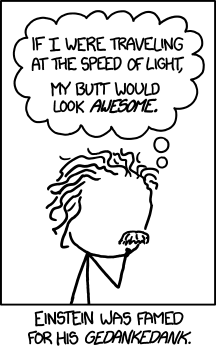
There are a few things that having cystic fibrosis makes just a liiiiiiitle bit different than most people's lives. I'm not saying that makes us special, just that our experiences will never 100% jive with normal people's experiences. Or, for that matter, the experiences of people with other diseases, especially ones acquired later in life. I'd like to talk about things that come out, well, a slightly different shade of life - as if those of us with CF are moving at relativistic speeds and have red-shifted from your point of view (as you have red-shifted from our point of view). And this difference gets more pronounced the farther down the rabbit hole we go; the farther our disease takes us. A key difference is the tenor of our relationships.
Wednesday, a friend of mine whom I've known for more than a year, attended many transplant meetings with, and feel very close to -- yet have never physically touched -- finally, finally got her transplant. You know, I really thought Emily was doing OK there for a while, but then she took a sudden turn for the worse, ending up hospitalized on high flow oxygen, then ECMO... I began to worry. ECMO is a real sign that your lungs are done. Were it not for this mechanical intervention, she'd have died. And it kept her alive...for about two weeks, she waited in this state and finally she got her transplant this last Wednesday night slash Thursday morning!
I am incredibly relieved and thankful! It may be the prednisone in my system, but I broke down in tears of joy when I read the notice on her Wall. In these cases, it's always possible that lungs won't be found in time. But there was a time when I told her I was sure that though she came to the transplant program after me and was listed after me, she'd get her transplant before me. I also told her that I was sure she'd get a transplant because girls like her ALWAYS get a transplant, but that I am not so sure about myself. (Ah, but those doubts are for another blog post.)
So...why am I so invested in Emily's progress? Why is her journey, the travails of a girl I actually actually hardly know, so riveting to me? It's because, I think, those of us with CF and particularly those of us who have reached end-stage CF, feel close to one another in a way similar to what soldiers describe after surviving harrowing battles together. In very real, very concrete ways, we are more brothers and sisters to each other than our biological families. It's true! My brother and my sisters will never understand what I'm going through or what I'll soon be going through. But Emily can and does. And I understand her struggles. Same goes for Piper and Jerry and James and Kenna and Megan and dozens of others. We know precisely -- and in minute, excruciating detail -- what each other is going through. And for the few parts of their journeys I haven't already experienced, I am incredibly thankful my brothers and sisters are slightly ahead of me on their journeys, so as to shine a light on a very dark path, as I strive to shine a light on the path I've already traveled.
This, you see, is one of those relativistic differences. How many people have such an extended family? That when you gripe about coughing up green mucous with red streaks in it, that there's a chorus of "yep, been there done that"? Or when you have a question about the best way to keep from getting tangled up in your oxygen tubing while sleeping, that there's a half dozen good suggestions? Or grumble about having spent half your morning on the toilet attempting to kill every living thing in the house... Well, I honestly don't think most people can experience this. There's also the fact we've lived with this our entire lives. OUR ENTIRE LIVES. By contrast, there's damn few other people who have life-impacting conditions since birth. Most people's problems - whatever they are - came on with age, with injury, with having done something stupid, or stupidly having failed to do something. (Let's face it: as a race, most of our problems are the result of putting things of too little quality and too high quantity into our various orifices. I am sometimes....not as sympathetic as I could be towards the problems brought on by excess, as opposed to the problems brought on by genetics.)
Having CF is also somewhat like being a photon in a laser beam. We are not only on the same wavelength, we are on the same vector. And those who aren't part of the laser beam, can't even SEE the laser beam. (CF is often an invisible disease to others, but that's for yet another blog post.)
So if you find me jumping around in ecstasy over the news that my friend Emily is off the vent, or her chest tubes are out, or she's finally gone home - don't think me lunatic or overly attached. Just realize that one of my sisters has had her life spared and I'm not only happy for her, but I'm happy for all of us with this miserable disease. Her progress becomes the progress of all of us; her success, our success. Her hope fulfilled, the expectant hope of us all.
There are a few things that having cystic fibrosis makes just a liiiiiiitle bit different than most people's lives. I'm not saying that makes us special, just that our experiences will never 100% jive with normal people's experiences. Or, for that matter, the experiences of people with other diseases, especially ones acquired later in life. I'd like to talk about things that come out, well, a slightly different shade of life - as if those of us with CF are moving at relativistic speeds and have red-shifted from your point of view (as you have red-shifted from our point of view). And this difference gets more pronounced the farther down the rabbit hole we go; the farther our disease takes us. A key difference is the tenor of our relationships.
Wednesday, a friend of mine whom I've known for more than a year, attended many transplant meetings with, and feel very close to -- yet have never physically touched -- finally, finally got her transplant. You know, I really thought Emily was doing OK there for a while, but then she took a sudden turn for the worse, ending up hospitalized on high flow oxygen, then ECMO... I began to worry. ECMO is a real sign that your lungs are done. Were it not for this mechanical intervention, she'd have died. And it kept her alive...for about two weeks, she waited in this state and finally she got her transplant this last Wednesday night slash Thursday morning!
I am incredibly relieved and thankful! It may be the prednisone in my system, but I broke down in tears of joy when I read the notice on her Wall. In these cases, it's always possible that lungs won't be found in time. But there was a time when I told her I was sure that though she came to the transplant program after me and was listed after me, she'd get her transplant before me. I also told her that I was sure she'd get a transplant because girls like her ALWAYS get a transplant, but that I am not so sure about myself. (Ah, but those doubts are for another blog post.)
So...why am I so invested in Emily's progress? Why is her journey, the travails of a girl I actually actually hardly know, so riveting to me? It's because, I think, those of us with CF and particularly those of us who have reached end-stage CF, feel close to one another in a way similar to what soldiers describe after surviving harrowing battles together. In very real, very concrete ways, we are more brothers and sisters to each other than our biological families. It's true! My brother and my sisters will never understand what I'm going through or what I'll soon be going through. But Emily can and does. And I understand her struggles. Same goes for Piper and Jerry and James and Kenna and Megan and dozens of others. We know precisely -- and in minute, excruciating detail -- what each other is going through. And for the few parts of their journeys I haven't already experienced, I am incredibly thankful my brothers and sisters are slightly ahead of me on their journeys, so as to shine a light on a very dark path, as I strive to shine a light on the path I've already traveled.
This, you see, is one of those relativistic differences. How many people have such an extended family? That when you gripe about coughing up green mucous with red streaks in it, that there's a chorus of "yep, been there done that"? Or when you have a question about the best way to keep from getting tangled up in your oxygen tubing while sleeping, that there's a half dozen good suggestions? Or grumble about having spent half your morning on the toilet attempting to kill every living thing in the house... Well, I honestly don't think most people can experience this. There's also the fact we've lived with this our entire lives. OUR ENTIRE LIVES. By contrast, there's damn few other people who have life-impacting conditions since birth. Most people's problems - whatever they are - came on with age, with injury, with having done something stupid, or stupidly having failed to do something. (Let's face it: as a race, most of our problems are the result of putting things of too little quality and too high quantity into our various orifices. I am sometimes....not as sympathetic as I could be towards the problems brought on by excess, as opposed to the problems brought on by genetics.)
Having CF is also somewhat like being a photon in a laser beam. We are not only on the same wavelength, we are on the same vector. And those who aren't part of the laser beam, can't even SEE the laser beam. (CF is often an invisible disease to others, but that's for yet another blog post.)
So if you find me jumping around in ecstasy over the news that my friend Emily is off the vent, or her chest tubes are out, or she's finally gone home - don't think me lunatic or overly attached. Just realize that one of my sisters has had her life spared and I'm not only happy for her, but I'm happy for all of us with this miserable disease. Her progress becomes the progress of all of us; her success, our success. Her hope fulfilled, the expectant hope of us all.
July 22, 2013
A looming catch-22
I've been thinking lately about Vertex Pharmaceuticals. They've done such a great job so far creating CFTR correctors. There's now a drug that for 4% of CF patients is one step away from a cure. It actually restores the function of the faulty CFTR protein in these patients. And the reported results have been, for the most part, amazing. Lung function declines have stopped and in some patients function has improved. Digestion has improved. Little. Blue. Awesome.

There are trials right now testing a combination of Vertex drugs to see if the CFTR can be corrected well enough in people with my mutation: two copies of delta-f508.
But I see a problem on the horizon; and it's a problem only for a very select few patients, the ones in the same boat as me: listed for transplant.
I am actually worried that a Vertex product will be approved for double-f508d before I get my transplant. Why? Well, what if my doctor prescribes it? If I don't take it, I'm labeled non-compliant and kicked off the tx list and I die. If I do take it, and my lung function stops dropping or even improves slightly, then I'm stuck in a just-shy-of-transplant hell. Again, possibly dropped off the list if my O2 use lowers and FEV1 stays above 25%. (To be sure, I'm not convinced that's even possible. I think the physical damage is done, regardless of any PFT improvement brought about by clearing out all the mucous.) And even if I stay on the list, tethered to an oxygen source 24/7, yet able to nominally function, my Lung Allocation Score won't be rising. It'll be stuck where it is. And thus there will be an endless stream of PF and sarcoidosis (and etc) patients getting sicker than I -- I'll never reach the top of the list. I'll never be transplanted.
I am horrified when I contemplate the catch-22 that could land me squarely in a living hell. And in all of human history, this can happen ONLY AT THIS POINT IN TIME. FML.
November 30, 2012
Clinging to the cliff
I have often said to friends over the last decade that I strongly suspect the course of my CF would not be a long, slow glidepath to a predictable end, but rather that I'd last a long time in my 40s (FEV1, not age) and then experience a sudden drop, as if my lungs had stepped off a cliff. This has proven prescient on my part.

While the drop in my lung function over the last six to eight months can certainly be resemble a stock market crash when graphed, it has been more like losing one's footing on a steep and scree-covered slope. You're going along navigating things pretty well one moment and then - zing! - you're falling down the hill at a great rate of speed, getting pretty cut up along the way, and desperately looking for something, anything, that will arrest your fall - especially since the bottom of the slope is a dropoff into death.
But there are branches to catch onto, if you know where they are and can grab at them just right. There are IV antibiotics at regular intervals, there are oral and inhaled steroids, there are bronchodilators. There's exercise and nutrition. These can all slow your fall. And to pad it - to keep from getting too banged up to survive the landing - are other devices: supplemental oxygen and ultimately that great portal to a different slope, the transplant.
I am now on oxygen. And though that needs a whole post in itself, I will say only what has been rattling through my head this afternoon about that: oxygen makes me feel strong again. I'm not as actually strong as I was this time last year, but at least I can get up out of the subway without gasping for breath or having to rest at the top. (Or worse: midway up.)
Right at this moment, I have temporarily arrested my slide. Maybe I have found myself on a narrow ledge treacherous in itself, but less deadly than the slope I've been coming down or the cliff that comes next. You see, when I went to my siblings' town for Thanksgiving, I was so wrapped up in dealing with the portable oxygen concentrator and packing IV meds (yes, I was on IVs the whole time!) that I forgot my inhaled medications.
Let me repeat that: for three days, I had NO pulmozyme, hypertonic saline, pulmocort, or aztreonam. I only happened to have albuterol in my suitcase already because as it doesn't need refrigeration, I had some extra in there. And by the time I returned to New York, my lungs felt great. Could it be the cleaner air in Greenville, SC? Could it be that giving my lungs a break from these harsh medications is what they needed? I ask because I've been back less than a week and already the tightness and the wheezing has returned. I'm tempted to DC the inhaled meds for a three day block again just to see what happens.
And what, clinically, DID happen? Well...my PFTs are up! I had a series of tests and appointments on Wednesday and in stark contrast to my recent decline, my numbers had improved substantially. My lung volume up 17 percentage points. My FEV1 up 8 percentage points. I had not thought this possible! My weight, however, is down. By a lot. I must make a very concerted effort at better nutrition, gaining weight, putting on muscle mass, etc. I am even considering making another run at going on disability, though I still think that has more against it than for it right now. But I cannot let work get in the way of taking care of myself.
Lastly, I'll note that I'm staring into a void I've long known about, but am now in a very real position to have to deal with. My team at NY Presbyterian is going to have their monthly review meeting about their patients and actually bring my name up to be put on the list this time. That may or may not happen. Had my PFTs not improved, I'd say it was a certainty. Now, maybe 65/45. Even once listed, I'll have a very low Lung Allocation Score, since I am not on oxygen 24/7, but only with exertion and while sleeping.
Even standing here on this narrow ledge, I realize I have much to do before going over the side, with or without a successful lung transplant. And the time I have left to do it in is getting so short. And if I come out the other side in good shape, I have so much MORE to do then, too!
While the drop in my lung function over the last six to eight months can certainly be resemble a stock market crash when graphed, it has been more like losing one's footing on a steep and scree-covered slope. You're going along navigating things pretty well one moment and then - zing! - you're falling down the hill at a great rate of speed, getting pretty cut up along the way, and desperately looking for something, anything, that will arrest your fall - especially since the bottom of the slope is a dropoff into death.
But there are branches to catch onto, if you know where they are and can grab at them just right. There are IV antibiotics at regular intervals, there are oral and inhaled steroids, there are bronchodilators. There's exercise and nutrition. These can all slow your fall. And to pad it - to keep from getting too banged up to survive the landing - are other devices: supplemental oxygen and ultimately that great portal to a different slope, the transplant.
I am now on oxygen. And though that needs a whole post in itself, I will say only what has been rattling through my head this afternoon about that: oxygen makes me feel strong again. I'm not as actually strong as I was this time last year, but at least I can get up out of the subway without gasping for breath or having to rest at the top. (Or worse: midway up.)
Right at this moment, I have temporarily arrested my slide. Maybe I have found myself on a narrow ledge treacherous in itself, but less deadly than the slope I've been coming down or the cliff that comes next. You see, when I went to my siblings' town for Thanksgiving, I was so wrapped up in dealing with the portable oxygen concentrator and packing IV meds (yes, I was on IVs the whole time!) that I forgot my inhaled medications.
Let me repeat that: for three days, I had NO pulmozyme, hypertonic saline, pulmocort, or aztreonam. I only happened to have albuterol in my suitcase already because as it doesn't need refrigeration, I had some extra in there. And by the time I returned to New York, my lungs felt great. Could it be the cleaner air in Greenville, SC? Could it be that giving my lungs a break from these harsh medications is what they needed? I ask because I've been back less than a week and already the tightness and the wheezing has returned. I'm tempted to DC the inhaled meds for a three day block again just to see what happens.
And what, clinically, DID happen? Well...my PFTs are up! I had a series of tests and appointments on Wednesday and in stark contrast to my recent decline, my numbers had improved substantially. My lung volume up 17 percentage points. My FEV1 up 8 percentage points. I had not thought this possible! My weight, however, is down. By a lot. I must make a very concerted effort at better nutrition, gaining weight, putting on muscle mass, etc. I am even considering making another run at going on disability, though I still think that has more against it than for it right now. But I cannot let work get in the way of taking care of myself.
Lastly, I'll note that I'm staring into a void I've long known about, but am now in a very real position to have to deal with. My team at NY Presbyterian is going to have their monthly review meeting about their patients and actually bring my name up to be put on the list this time. That may or may not happen. Had my PFTs not improved, I'd say it was a certainty. Now, maybe 65/45. Even once listed, I'll have a very low Lung Allocation Score, since I am not on oxygen 24/7, but only with exertion and while sleeping.
Even standing here on this narrow ledge, I realize I have much to do before going over the side, with or without a successful lung transplant. And the time I have left to do it in is getting so short. And if I come out the other side in good shape, I have so much MORE to do then, too!
February 21, 2012
Tx seminar #...I'm losing track
Another transplant seminar today. This was a good one, covering post-transplant recovery and drugs. One doctor (nurse? I never quite caught it) talked about what happens from the moment they staple you shut and wheel you into recovery. There was another patient there six months post who confirmed what was being talked about. Some of this included complications and that these speedbumps are considered part of the journey, not a step backward. This patient had a SEVERE couple of complications and nearly died.... but trust in the team, dedication and adherance to post-tx regimen...and he's doing really fanstastically well. Looks great, sounds great, heavier body weight than ever in his life (from 104 lbs at time of transplant complications to 160 lbs now).
Nothing terribly surprising in the post-tx process. I've heard it all before from other patients. Also nothing surprising in the pharmacist's discussion of post-tx drugs. I did learn a few new drug names and that some are an either/or choice - that you are on certain drugs at the same time. Also reassured that while there will be some experimentation in the tailoring of the drug cocktail to me over time, that the process is the same for everybody and ultimately everybody arrives at a good drug combo. I sent a scan of the summary sheet of the handout to my mom and sis. I did learn one blood-thinning drug is taken via injection. The pharmacist was surprised when I asked how it compared to the ease of, say, a Lantus or Novolog pen injection. She described what's possibly an even easier injection! Great.
So... I am substantially mentally prepared for the after part. I know it's gonna hurt like hell for a while, but that pain medications will take the edge off that, and I'm not one to be afraid of some pain anyway. Don't get me wrong: I am vastly appreciative of lidocaine and the like, but will not shirk at some post-operative pain. I found myself wondering how it would compare to the pain I felt after my motorcycle accident, where I was in astounding pain from head to toe. Enough so that not only did Percoset do nothing at all, but I didn't even know until a couple days later that I'd broken my leg at the top of the tibia.
Of note: I talked with the patient sitting beside me, a young woman named Rachel. I had already retrieved a mask and put it on, but I wanted to make sure I wasn't sitting next to another CF patient. Turns out she had something else quite unique in the people I've met so far: Lyme disease. This autoimmune syndrome has destroyed her lungs.
We got onto the topic of PFTs when she asked if I'm listed and I said I wasn't, but since my numbers now regularly dip below 25% FEV1, here I am: evaluated, trying to maintain, learning, biding my time. She was surprised. She's in the high 30's still, but sats in the 80's if she so much as stands up and is on two liters of O2. I suggested that it may be unusual, but really we were talking about two different measures: PFTs measure volume and muscle tone, whereas saturation measures how viable the remaining gas exchange tissue is. Clearly, her autoimmune has damaged her alveoli all over without as much scar tissue as I've got. On the other side, I have 70% of my lung tissue remaining, about 30% is viable gas-exchange real-estate, but seems to be functional, hard-working real estate. So, low FEV1, but can remain at acceptable oxygen saturation. I did admit that I should take more measurements during exercise and when I wake up in the middle of the night; try to get a picture of THAT.
Well.... the evening went very long, though was worth it.
Two quick items in other news:
1) I'm setting up a cat TV. The tank is set up and cycled and I will go get three guppies tomorrow from a breeder that is offering all-black fancy guppies. A good starter for me, I think, and the cats should certainly enjoy it. :)
2) My friend and kinda mentor Jerry Cahill got the call tonight for new lungs. That's all I know right now. Whether this turns out to be a dry run (most people have one or two dry runs and I met a guy who's had EIGHT so far) or if he wakes up tomorrow a partially new man, time will only tell. I wish Jerry all the best no matter what.
Nothing terribly surprising in the post-tx process. I've heard it all before from other patients. Also nothing surprising in the pharmacist's discussion of post-tx drugs. I did learn a few new drug names and that some are an either/or choice - that you are on certain drugs at the same time. Also reassured that while there will be some experimentation in the tailoring of the drug cocktail to me over time, that the process is the same for everybody and ultimately everybody arrives at a good drug combo. I sent a scan of the summary sheet of the handout to my mom and sis. I did learn one blood-thinning drug is taken via injection. The pharmacist was surprised when I asked how it compared to the ease of, say, a Lantus or Novolog pen injection. She described what's possibly an even easier injection! Great.
So... I am substantially mentally prepared for the after part. I know it's gonna hurt like hell for a while, but that pain medications will take the edge off that, and I'm not one to be afraid of some pain anyway. Don't get me wrong: I am vastly appreciative of lidocaine and the like, but will not shirk at some post-operative pain. I found myself wondering how it would compare to the pain I felt after my motorcycle accident, where I was in astounding pain from head to toe. Enough so that not only did Percoset do nothing at all, but I didn't even know until a couple days later that I'd broken my leg at the top of the tibia.
Of note: I talked with the patient sitting beside me, a young woman named Rachel. I had already retrieved a mask and put it on, but I wanted to make sure I wasn't sitting next to another CF patient. Turns out she had something else quite unique in the people I've met so far: Lyme disease. This autoimmune syndrome has destroyed her lungs.
We got onto the topic of PFTs when she asked if I'm listed and I said I wasn't, but since my numbers now regularly dip below 25% FEV1, here I am: evaluated, trying to maintain, learning, biding my time. She was surprised. She's in the high 30's still, but sats in the 80's if she so much as stands up and is on two liters of O2. I suggested that it may be unusual, but really we were talking about two different measures: PFTs measure volume and muscle tone, whereas saturation measures how viable the remaining gas exchange tissue is. Clearly, her autoimmune has damaged her alveoli all over without as much scar tissue as I've got. On the other side, I have 70% of my lung tissue remaining, about 30% is viable gas-exchange real-estate, but seems to be functional, hard-working real estate. So, low FEV1, but can remain at acceptable oxygen saturation. I did admit that I should take more measurements during exercise and when I wake up in the middle of the night; try to get a picture of THAT.
Well.... the evening went very long, though was worth it.
Two quick items in other news:
1) I'm setting up a cat TV. The tank is set up and cycled and I will go get three guppies tomorrow from a breeder that is offering all-black fancy guppies. A good starter for me, I think, and the cats should certainly enjoy it. :)
2) My friend and kinda mentor Jerry Cahill got the call tonight for new lungs. That's all I know right now. Whether this turns out to be a dry run (most people have one or two dry runs and I met a guy who's had EIGHT so far) or if he wakes up tomorrow a partially new man, time will only tell. I wish Jerry all the best no matter what.
Subscribe to:
Posts (Atom)